
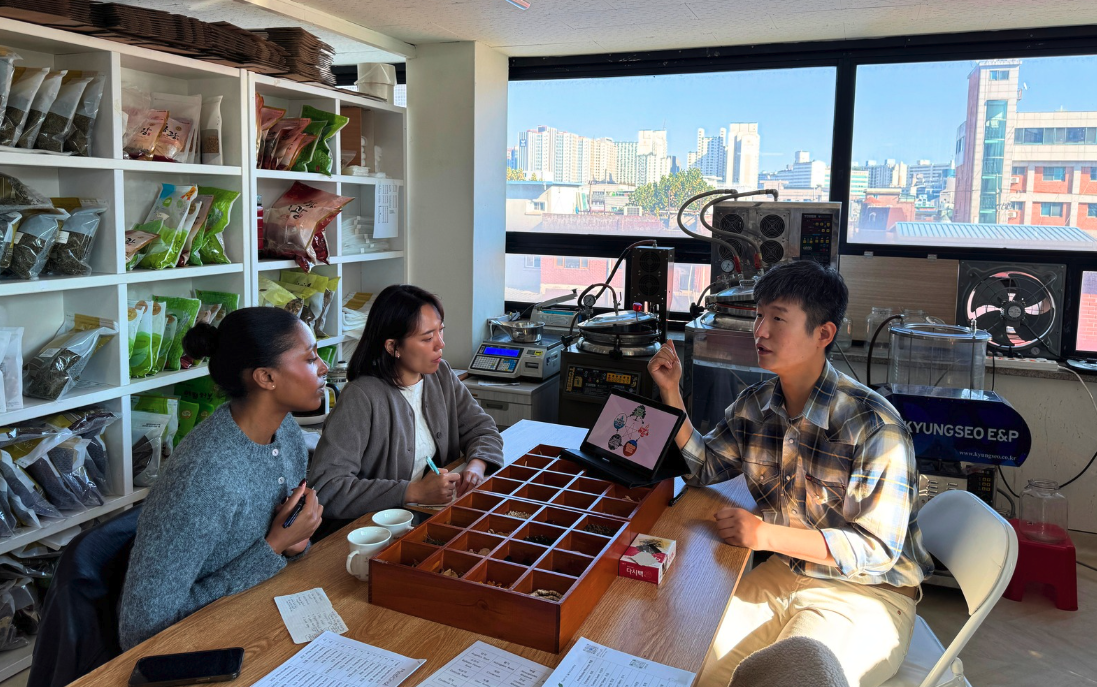
When visiting Asia, one thing we always recommend is diving into Oriental medicine — especially if you’re coming from the West. It’s fascinating how different the approach is compared to Western medicine. Instead of focusing on symptoms, it’s about understanding your unique body, finding balance, and preventing illness through nature and lifestyle.
Recently, our team had the chance to experience this firsthand through a herbal tea class based on Korean traditional medicine — a one-day program called Heojun Oppa. The class is led by Sung-il Choi, a specialist who studied Korean Oriental Medicine and created this program to share his knowledge with curious travelers.
Finding the Healing Streets of Seoul
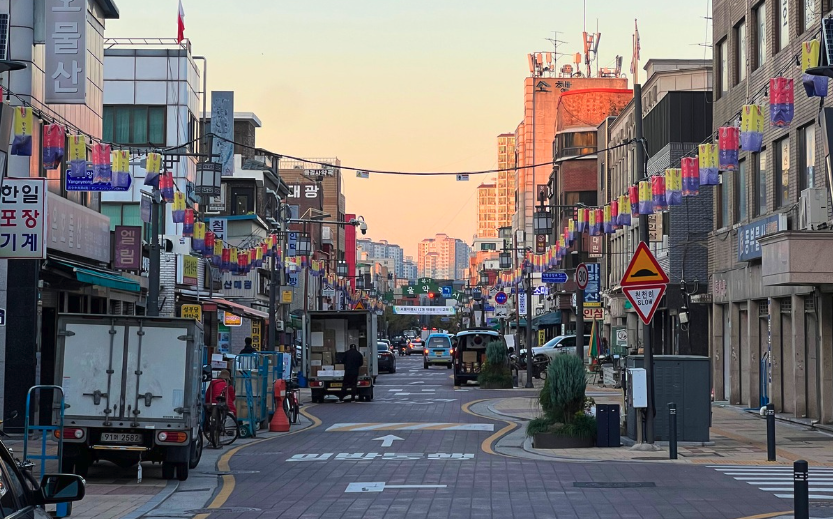
The experience is held in Seoul Yangnyeongsi Market (서울 약령시장) — the heart of Korea’s traditional medicine district. From Jegi-dong Station (Line 1, Exit 2), the streets come alive with rows of herbal pharmacies, oriental clinics, and the earthy scent of ginseng floating through the air.
It can be a bit tricky to find your way if it’s your first time wandering Seoul’s side streets, but that’s part of the adventure — and once you spot the cozy workshop tucked between the herb shops, you know you’ve arrived.
A Warm Welcome to the World of Herbs
Before the class begins, everyone washes their hands and receives an information booklet filled with beautiful illustrations of common herbs — their benefits, which organs they support, and how they can be combined for wellness. Soon after, the table fills with around 40 jars of herbs that you can touch, smell, and explore. It’s surprisingly calming — kind of like meeting nature’s medicine cabinet in person.
As you get comfortable, Sung-il prepares a welcome drink, a warm herbal tea known to boost circulation and energy. The taste feels both earthy and soothing — a perfect way to start.
Blending Your Own Tea

After learning the basics, it’s time to create your own herbal tea. You can choose up to five herbs or simply share what kind of health concerns you have — maybe you’ve been feeling tired lately, or having trouble sleeping. Sung-il listens carefully and helps you select a custom blend that fits your body’s needs (and your taste!).
While your tea brews, he gives a mini lecture on Korean Oriental Medicine — explaining how emotions connect to organs, how the balance of yin and yang keeps us healthy, and how every person’s constitution is different. Unlike Western medicine’s “one-size-fits-all” mindset, Korean medicine focuses on you. It’s been developed over thousands of years through trial, observation, and human experience — that’s why it’s often called the “Medicine of Experience.”
The Taste of Balance
Once your tea is ready, it’s time to drink and reflect. You can actually feel the warmth and energy as you sip your custom blend — knowing it was made just for you. And before you leave, you’ll receive a small bottle of your tea to take home, a thoughtful reminder of your experience and something truly personal to bring back from Seoul.
Exploring the K-Medi Center
After the class, Sung-il leads you to the K-Medi Center, also known as the Traditional Korean Medicine Museum. Here, history and modern technology meet — there are interactive exhibits, ancient herb tools, and even AI displays that show what you might have looked like as a Joseon-era doctor!
If you have extra time, you can also join optional wellness programs like a ginseng foot bath (₩6,000) to help with circulation or a meridian massage (₩5,000) that uses gentle heat to relax your muscles and improve energy flow.
(Note: The foot bath is closed from December to February due to the winter season.)
A Meaningful Seoul Experience
If you’re traveling to Seoul and want something deeper than sightseeing, this is the perfect experience. It’s peaceful, educational, and surprisingly fun — and you walk away feeling more connected to your own body.
From tasting earthy herbs to learning the philosophy behind Korean wellness, this class offers a rare chance to slow down and rediscover what health really means. A solid 10/10 experience — unique, grounding, and something you’ll keep thinking about long after you leave Seoul.
Fun fact: The name “Heojun” comes from Heo Jun, a legendary Korean medical scholar during the Joseon Dynasty. He compiled the Dongui Bogam, one of Korea’s most important medical texts, which still influences traditional medicine today.
Written by Kayla Watson